


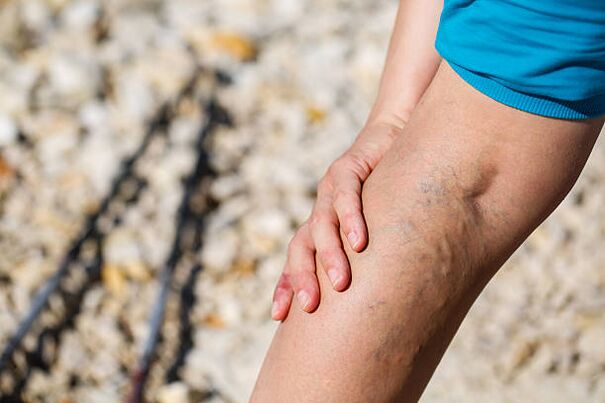
Varicose veins of the lower extremities, as well as varicose veins, are manifested as dilation of the superficial veins of the legs, accompanied by impaired blood flow and valvular insufficiency.Currently, varicose veins are very common: they are observed in about 17-25% of people.At a young age, before the onset of puberty, this disease develops with equal frequency in both sexes.However, adult women have varicose veins twice as often as men.This picture can be explained by significant hormonal changes during the period of pregnancy.As a result, the tone of the vessels weakens, expands, and the venous circulation is disturbed.
Factors predisposing to varicose veins
Today, experts tend to support many theories that show why varicose veins develop in the legs.However, when talking about the main cause of this disease, it is necessary to mention the violation of the valvular apparatus of the vessels.In a standing person, when the vascular valves are incompetent, blood flows downward under the influence of gravity.During walking, the muscles of the lower leg, which surround the deep veins, contract.Accordingly, the veins are emptied and an increase in venous pressure occurs.As a result, blood enters the superficial veins, they stretch, and varicose veins appear.
There are a number of factors that directly affect the progression of varicose veins.Varicose veins in women often develop as a result of pregnancy.During this period, the volume of blood in the female body increases significantly.The growing uterus puts a lot of pressure on the veins from the legs.In addition, the condition of the vascular wall during pregnancy is affected by hormonal changes in the body.In many cases, varicose veins are reversible during pregnancy, that is, they gradually disappear after childbirth.
Very often, varicose veins of the lower extremities appear in people who are forced to stand for a long time while working.Another risk factor for varicose veins is obesity: obese people have increased intra-abdominal pressure, resulting in enlarged veins.Often, the veins are enlarged in people prone to regular stress.This happens with chronic constipation, cough, prostate adenoma and other conditions.Varicose veins can sometimes be the result of leg surgery.
Another factor that predisposes to varicose veins is a person's age.Typically, valves and vessel walls age over time.As a result, elasticity is lost and veins are stretched.Varicose veins often occur in patients suffering from deep vein thrombosis and congenital anomalies of blood vessels.
Symptoms of the development of varicose veins of the legs
First of all, the visible symptoms of varicose veins in the legs are the appearance of a network of thin veins on the skin surface of the legs.Such manifestations occur mainly in the thigh region.Such varicose veins are most easily seen in people suffering from cellulite.Sometimes it is cellulite that is a precursor to varicose veins.Often, due to cellulite, fat deposits compress the venous vessels, and as a result, blood flow becomes difficult and the varicose veins expand.
In some cases, swelling in the legs indicates the beginning of varicose veins.But such a sign can be a symptom of other diseases (heart failure, urolithiasis of the kidneys).Therefore, in this case, it is impossible to talk about the development of varicose veins before making a diagnosis.A symptom of varicose veins is often pain in the legs.The pain may be sharp and may also have nagging symptoms.The most common symptom of varicose veins is pain in the legs.It happens mainly in the afternoon, after a certain load on the legs.There may be a feeling of severe heaviness in the legs, cramps may occur at night, trophic changes in the legs appear gradually.
Thus, a person who observes the appearance of a capillary network, periodic manifestations of pain and swelling should consult a doctor and conduct a proper investigation.There are a number of different tests that allow you to evaluate the condition of the veins and the degree of development of the disease.If a patient has uncomplicated varicose veins, instrumental diagnostic methods are not used in most cases.
Varicose veins treatment principles
Conservative treatment of varicose veins is mainly prescribed to people with clear contraindications to surgical intervention.Also, if the patient has mild varicose veins, which are a purely cosmetic defect, this type of treatment is indicated.
The goal of conservative therapy is to prevent further progression of this disease.For this purpose, patients are advised to wrap their legs affected by varicose veins with an elastic bandage.In addition, compression knitting is indicated for varicose veins.
People prone to varicose veins or already suffering from this disease should regularly put their feet on a high surface during the day and rest in this way for a few minutes.There are also special exercises aimed at activating the musculo-venous pump for the lower leg and foot.This is the periodic extension and flexion of the ankle and knee joints.
Treatment of varicose veins also involves wearing comfortable shoes, which should have low heels and hard soles.You should not stand for a long time, do not indulge in physical stress, and stay in rooms with high temperature and humidity for a long time.It is advisable to keep your legs elevated while sleeping.
Patients should limit fluid and salt intake and try to lose excess weight.To treat varicose veins, it is necessary to periodically take diuretics, drugs that improve the tone of the veins.In addition, if indicated, the patient can be prescribed drugs that stimulate microcirculation in the tissues.Treatment of varicose veins may also include taking non-steroidal anti-inflammatory drugs.If the patient has an uncomplicated form of the disease, physical therapy exercises are indicated.Swimming, other water procedures, foot baths with warm water with 5-10% sodium chloride solution are very useful.
However, the radical method of treating varicose veins is surgery.If the patient has concomitant diseases of the lungs, cardiovascular system, kidneys or liver, this operation is not performed.This operation should not be performed on pregnant women, as well as people suffering from purulent diseases.Modern technologies allow using endoscopic methods for such an operation.If a person only has enlarged small branches, sclerotherapy can be used.This operation involves injecting a sclerosing solution into the vein to close the vein walls.After that, repeated injections are made to other parts of the vessel, achieving complete obliteration of the vessel.
For varicose veins, combined surgical therapy is also used, in which the large trunks of the changed veins are removed and sclerotherapy of small branches is performed.After surgery, patients are advised to continue wearing an elastic bandage for 8-12 weeks.
Prevention of varicose veins of the legs
Prevention of varicose veins includes a number of measures aimed at preventing the symptoms of the disease.It is useful for every person to keep the legs up from time to time, to take breaks during sedentary work, and not to wear underwear that strains the body.A good way to prevent varicose veins can be a contrast shower, including foods that are good for blood in your diet and some physical exercise.At the first signs of varicose veins, you should consult a doctor to prevent the development of the disease.